
How to Search the Wakefield Court Docket
Wakefield itself posts no searchable municipal docket in its city code. Its city pages offer none. The Nebraska court search materials offer none either. A Wakefield court docket search works best when you start from the paper. Pull out the citation, the complaint, or the hearing notice. Skip the city-name-only web search. A Wakefield parking notice can run through a city procedure before any complaint ever becomes a court matter. That is why the notice matters more than the name of the town. Once something is actually filed, the official record lives in the Nebraska JUSTICE register of actions. Choose Dixon as the county only if the paperwork names it. Keep the citation number and the exact party spelling handy.
- Read the Wakefield notice for the issuing agency, court line, citation number, and any payment or hearing deadline.
- For a city parking issue, ask the Wakefield City Clerk whether the matter remains in the city procedure or was sent forward as a complaint.
- When Dixon County Court is named, use the JUSTICE one-time court case search with the exact party name or case number.
- Check the separate Multi-Court Case Calendar for a current or future Wakefield-related setting, then compare it with the register.
- Call Sara Gunderson, Clerk of Dixon County Court, at (402) 755-5607 or use the courthouse terminal if an online result is incomplete.
Wakefield Has No Separate Court Docket Portal
Wakefield's own government materials cover a city office, a council, a code, and civic meetings. What they lack is any court case lookup or judicial calendar. No municipal judge or searchable ordinance register appears either. That gap matters. A city-agenda page proves nothing about a court setting in Wakefield. The state's County Court description places municipal ordinance violations inside County Court jurisdiction. If the city clerk confirms a Wakefield matter became a complaint, the County Court register, not a city portal, holds the case. Remote access has real limits. The paid JUSTICE name search costs $17. An entry can take about 24 hours to appear. A result may show the case summary, parties, financial information, register of actions, and eligible images. A no-result search does not rule out a new, restricted, misspelled, or paper-only record. Two practical fallbacks remain. The free courthouse JUSTICE terminal is one. A specific-record request to the clerk is the other. City sources and court sources stay separate.
The Wakefield Municipal Court
People search the phrase. Wakefield has no separately operating Municipal Court and no public municipal-court register. Wakefield is a second-class city. Its two wards are split by 5th Street. It has a mayor, a four-member council, and city administration. Those facts describe local government, not a stand-alone court. The city code holds Wakefield ordinance text. A court record exists only once a matter is filed in the court named on the paperwork. For Wakefield traffic, ordinance, misdemeanor, small-claims, probate, and preliminary-hearing matters, Dixon County Court is normally the trial-court entry point. A felony after bind-over, or a general-jurisdiction civil or domestic matter, can land in Dixon District Court. The city clerk can point you to the city-side contact or ordinance source. The judicial clerk, though, keeps the register of actions. That office can quote copy or certification charges. City administration and court administration carry different record duties.
Wakefield Civic Notices Are Not Court Records
Wakefield council meetings are listed for the second Wednesday of each month at 5:30 p.m. at the Civic Center. The city says notices go up at the City Office, BankFirst, and Post Office. Since 2019, agendas and minutes have lived on a cloud site. Those are useful civic records. They do not replace the Wakefield court docket or reveal a court hearing. A council agenda may cover an ordinance. It may cover city policy too. Either way, it is not the chronological register of a filed case. The Wakefield local-government page shows that split in the city's own structure. A court register records filings, hearings, orders, and other case events. The state calendar is a separate finding aid. It serves current or future settings. Use city material for the ordinance and city process. Use the clerk or JUSTICE for the court record itself. The split helps most when a Wakefield notice mentions a council meeting or a city deadline. Treat that as an administrative event. That changes only if it names a County Court or District Court case number plus a judicial setting. A notice becomes part of a court search only after its court route is clear.
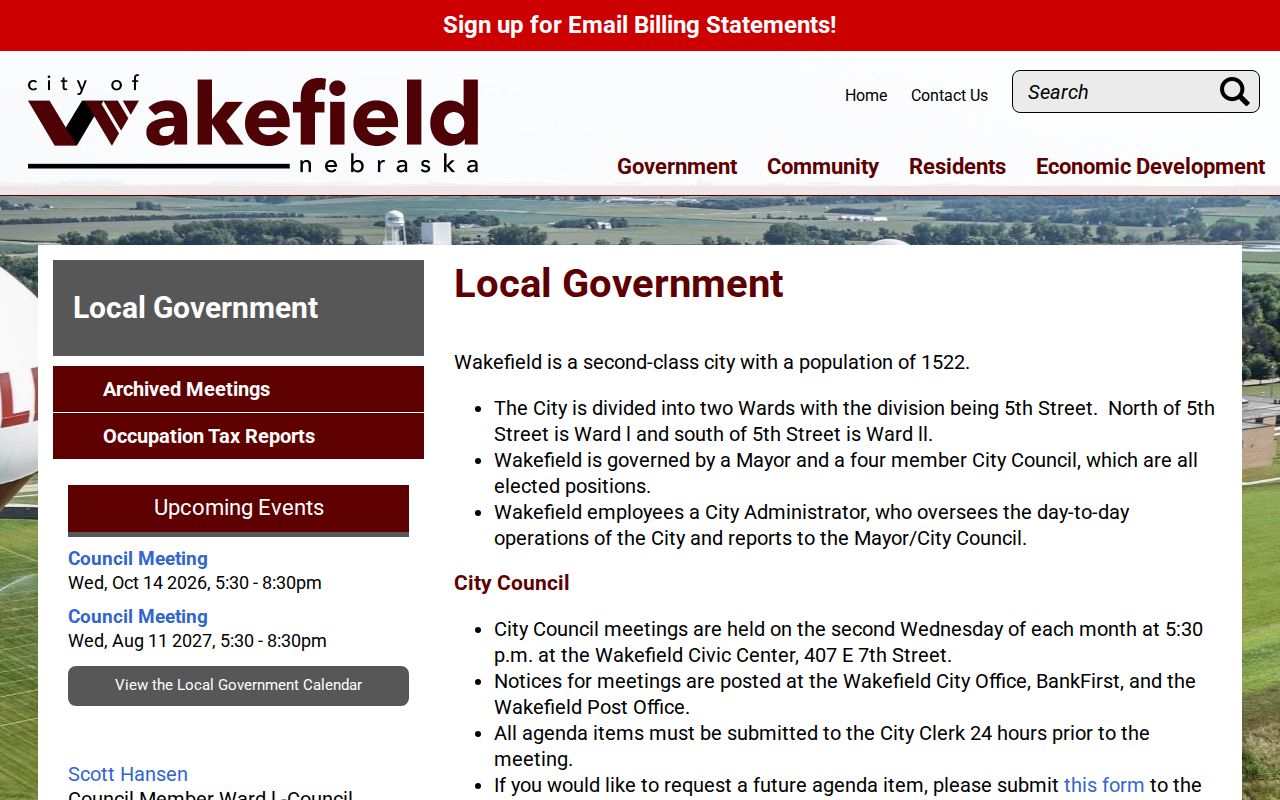
The government page documents Wakefield civic process. A judicial register comes only through the court channels described above.
Wakefield Court Dates and Settings
Confirm any Wakefield court date through the court printed on the citation. Or confirm it through the court record itself. The Multi-Court Case Calendar lets you search County Court or District Court by date or last name. Its date search covers current and future settings only. The calendar also warns that information may lag. A missing result does not necessarily mean no court date exists. Past settings tell a different story. For notices, continuances, orders, and the fuller Wakefield case history, the register of actions is the better tool.
| Date | The calendar or register date for the Wakefield-related setting; confirm a recent change with the clerk. |
|---|---|
| Time | The time returned for the setting, not an assumed city-office or council-meeting time. |
| Courtroom | The room or location shown by County Court or District Court when the calendar renders it. |
| Judge | The judge shown on the actual court record or calendar, when displayed. |
| Setting Type | The returned label, such as arraignment, pretrial, motion hearing, trial, review, or sentencing. |
Wakefield's Five-Day Parking Hearing Request
Wakefield handles parking citations through its own city procedure. Treat that process as the starting point rather than assuming a court docket exists. The city wants a written hearing request delivered to the City Clerk within five days. The clerk then forwards the citation to the City Attorney. Notice goes out by mail to the registration address. Keep two things straight about that deadline. It is a city filing deadline. It is not a JUSTICE search deadline. It does not prove Dixon County Court has assigned a case number.
Hang onto your copy of the written request and the citation number. Then ask the clerk three questions: does the matter stay in the city hearing process, did the City Attorney receive it, and has a complaint been filed in Dixon County Court? If a court case is confirmed, switch your search. Use the County Court register, calendar, clerk, or courthouse terminal. Moving between the two systems at the right moment keeps a Wakefield searcher from missing the short five-day city window while waiting for a court entry to appear. The hearing step and the court step do not always happen together.
Wakefield Traffic Tickets
Wakefield's parking rule carries three numbers worth memorizing. Pay $10 if you pay within seven days. Pay $20 on days 8 through 25. After 25 days, the regulation says a complaint is filed. Payment goes to the City Clerk or travels by mail under the city procedure. Those dollar figures and deadlines belong to Wakefield's listed parking regulation alone. A state or county citation written in or near Wakefield comes with its own court, waiver, appearance, and payment instructions. So read it carefully.
When a Wakefield-related citation names County Court, check several channels. The citation itself comes first. Then JUSTICE, the calendar, and Sara Gunderson's office. Nebraska's official ePayments service may accept eligible citations, fines, fees, restitution, judgments, and other listed court payments. Yet it never replaces confirming that the record is actually in court. Follow Wakefield payment instructions and Wakefield court instructions each as written. For a fuller explanation of citations and court dates, see Dixon County traffic court records.
Wakefield Parking Timelines Before a Court Filing
Three timing points drive a Wakefield parking matter. Pay inside the first seven days and you owe the lower parking amount. Days 8 through 25 cost more. Once 25 days pass, the rule calls for a complaint to be filed. That matters for a docket search. A Wakefield court docket can only take shape if and when the matter actually lands in court as a complaint. The city rule itself names no searchable municipal docket. It also makes no promise that every notice shows up in JUSTICE right away.
So check the Wakefield timeline and the Wakefield court record side by side. Payment, a hearing request, and a court appearance are three different steps. Follow the written notice. If a complaint has been filed, contact the Dixon County Court clerk. Give the clerk the party name, the year, the citation number, and any case number you have. New entries can lag about 24 hours in the public application. The clerk can confirm whether a court file exists. The clerk can also say whether it must be inspected at the counter.
Where Wakefield Cases End Up
Wakefield city government has no power to change Nebraska court jurisdiction. Ordinance matters that become court cases, traffic and misdemeanor matters, and felony preliminary hearings normally begin in Dixon County Court. Felonies move on to Dixon District Court after bind-over. District Court also handles general-jurisdiction civil and domestic matters. The city address, a deputy's involvement, or a city attorney's contact does not tell you which court holds the Wakefield register. That answer depends on the case level, not the letterhead.
Docket flow: Wakefield city procedure or citation › Dixon County Court › Dixon District Court when the case type or bind-over requires it
Traffic, municipal-ordinance, misdemeanor, and preliminary-hearing questions belong with the County Court clerk. For district civil, domestic, felony-after-bind-over, judgment, writ, or register questions, call Quin Rohan, Clerk of the Dixon District Court, at (402) 755-5604. The route your Wakefield case takes decides the clerk you need. Pick the wrong level and you lose time. The countywide court structure is summarized on the Dixon County court docket home page.
Why the Dixon County Sheriff Appears in Wakefield Docket Routing
Wakefield contracts with the Dixon County Sheriff for law enforcement. The city lists three designated deputies and a non-emergency number, (402) 287-2286. That contact helps with enforcement or routing questions. But it creates no Wakefield police docket and replaces no court search. An agency can sometimes point you to a report or citation pathway. The register of actions, the court setting, copies, and certified records come from the court clerk. They come from nowhere else.
The distinction guards against a common mix-up. An agency contact can be tied to a ticket. The docket belongs to the court that received the case. If the paperwork is unclear, ask the Sheriff or the city office which court is named. Then move the Wakefield search to that citation court, JUSTICE, the calendar, the clerk, the courthouse terminal, or a written request. Wakefield law enforcement and Wakefield court records serve two different public functions. The Wakefield law-enforcement page sets out the contracted-service arrangement with the Sheriff.
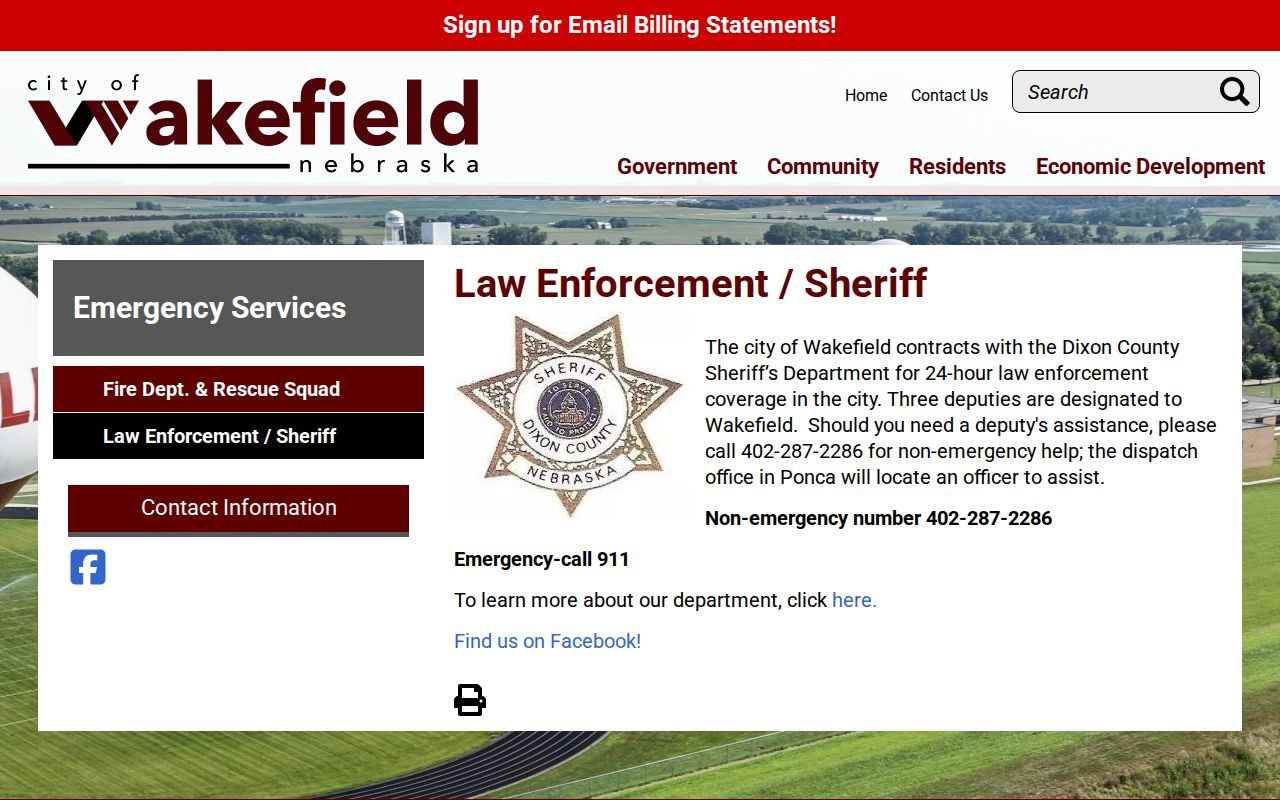
Note: Wakefield law-enforcement information can help identify the proper route. A court filing must still be verified in the court record.
Public Access to Wakefield Court Records
Access to a Wakefield court file follows Nebraska court rules, not whether the city posts anything online. Rule §1-805 lets the public view eligible indexes, summaries, registers of actions, calendars, and electronic images. That access runs through authorized systems or courthouse terminals. The Dixon County Court clerk handles the actual lookup. For a fee set by the schedule, that office can search a specific record. It can hand over any copies that access limits allow. So when a remote Wakefield search comes up short, go the old routes. Write the clerk, stop at the counter, call, or use the free terminal at the courthouse. Any Wakefield access question gets answered by the court holding the record. That is where restrictions are settled too.
Key Rules:
Nebraska Supreme Court Rule §1-805 - eligible public registers, calendars, summaries, and images are available through authorized electronic systems and courthouse terminals.
Nebraska Supreme Court Rule §1-808 - sealed, confidential, and otherwise excluded information does not become public simply because a case exists.
Neb. Rev. Stat. §84-712 - a written public-record request path exists, while court access remains subject to court rules and exclusions.
Wakefield Code and Court Register Are Different Records
Wakefield's city code says what the local rule is. The parking regulation explains the city's payment and hearing procedure. Neither one is a court docket. The register of actions is the chronological record of a case. Only after a case exists can it show filings, hearings, orders, continuances, judgments, and financial events. The split matters when someone has the ordinance wording. That person still needs to confirm a Wakefield court date or a filed complaint.
Take ordinance and procedural questions to the city office or city attorney. The case number, register, hearing setting, copies, certification, and restriction calls belong to County Court or District Court. One caution on missing images. If a public image is absent, that does not mean the Wakefield filing never happened. The filing may predate electronic images, may be unavailable remotely, or may be restricted. The right clerk can point you to the available record channel without revealing excluded material. Keep Wakefield code research and Wakefield docket research separate. The code, the court files, and the access decisions are three different things.